It seems that when it comes to high-stakes political campaigns, where every dollar has to count, politicians are still turning to what has always worked for them – television advertising.
Wells Fargo Senior Analyst, Marci Ryvicker predicts that $3.3 billion will be spent in political and issue advertising in 2010 – with 67% of every dollar spent going to television.
Here are her projections for the entire advertising industry for the 2010 Political season:
Let’s just cut to the chase? As it stands today, TV advertising builds brands. Internet advertising does not. There’s little doubt that once a brand is established, the Internet can and does keep the momentum moving forward, but until that point is reached all the banner ads and twitter tweets will do little to ingrain your brand into the psyche of the consumer.
Creating a memorable brand requires more than getting people to talk about your product on a social network. It requires the advertiser to make an emotional connection that television does so well. Do you honestly think Nike would be the #1 sports brand if it wasn’t for television advertising? Or would you feel the same connection with a little known insurance company if their AFLAC-ing duck never made its way onto your television screen?
Sure technology has changed, but the basic rules of effective marketing remain the same. You still need reach and frequency to create most truly memorable brands. And television advertising delivers both better than anything else out there.
Television has a rich history of transforming everyday companies into household names. From packaged goods to insurance, from fast food to tires – television has been responsible for creating some of the most memorable advertising icons.
Who can forget …
The Energizer Bunny … Frank Bartles and Ed Jaymes … Joe Isuzu … Tony The Tiger … The Michelin Man … Mr. Whipple … Dave Thomas … Mr. Peanut … The Keebler Elves … The Maytag Repairman … The Geico Gecko … Charlie The Tuna … Ronald McDonald … Mrs. Olsen … Jared from Subway … Clara “Where’s the Beef” Peller … Orville Redenbacher … The Marlboro Man …Colonel Sanders … Pillsbury Doughboy … Chef Boyardee … The AFLAC Duck … The California Raisins … Morris the Cat … The Quaker Oats Man … The Green Giant … Juan Valdez … The Doublemint Twins … The Budweiser Frogs … Rosie, The Bounty quicker picker upper … Aunt Jemima … Mr. Clean … The Verizon Wireless “Can You Hear Me Now” Man … Betty Crocker … The Lucky Charms Elf … The Geico Cavemen
Now, recall just one advertising icon or brand that wasn’t first introduced to you on television.
After a dismal 2009 for the ad industry, television should actually grow its overall share of the advertising revenue pie over the next couple of years. This coming from the ZenithOptimedia Groups report on the outlook on advertising in the U.S. marketplace.
According to the report, domestic ad spending in general will decline 12.9% this year and will erode another 4.4% in 2010. But prospects for TV are a lot more encouraging.
The agency expects television to return to growth next year. In 2009 it is expected to take 39.3% of all ad revenues and increase to 39.7% and 39.9% in 2010 and 2011, respectively.
So let me get this right, with all the advertising choices out there – traditional and digital – television’s share of the pie is getting bigger not smaller? How can this be?
The only explanation I can think of is that despite the talk of paradigm shifts and the world’s fascination with anything digital – there’s still enough advertisers, big and small, who are more persuaded by results than hype.
And at the end of the day folks – what else matters?
A new report by research Horowitz Associates, that surveyed 800 nationwide multichannel TV customers, reveals that only 2% (or two hours per month) of all TV viewing in the U.S. comes from non-traditional TV devices. That means that the majority of people still prefer watching their favorite
programs the good old fashion way.
According to Horowitz, the 2% represents two hours of the 130.2 overall hours that U.S. TV viewers watch in a month.
But when consumers do watch online, the #1 device for non-traditional TV viewing is the laptop. The top video viewing websites are:
YouTube
ABC.com
Hulu.com
NBC.com
The top types of programs watched on alternative video platforms are:
scripted dramas 24%
news programming 14%
comedy shows 13%
sports 13%
sitcoms 11%
Horowitz says that of those surveyed, over one-third (36%) wish all their favorite shows were available online; another 30% wish all TV shows were available on handheld devices.
A smaller number of TV viewers (7%) said that if all or most TV programs were available on their computer, they would get rid of their TV service.
The majority, however, still prefer traditional TV viewing. Eight in 10 (79%) say they prefer to watch TV shows on a TV versus a computer or handheld device.
The ultimate test of an effective television commercial is NOT how entertaining it was, but did it get results. More specifically, did viewers respond with their hard earned money?
As a retailer, if your agency can’t produce tangible results for your business then show them the door. And you’ll probably be ushering them out sooner rather than later, if your commercials lack any of these six basic elements:
Does your TV commercial…
1) Motivate viewers to take action immediately.
2) Explicitly communicate your product or service’s advantages over other choices.
3) Visually arouse your prospect. Test this by turning the sound off and see if it still has the same visual effect.
4) Inspire trust, confidence and believability.
5) Provide a single consistent message that penetrates the viewers’ minds and stays there long after the commercial is over.
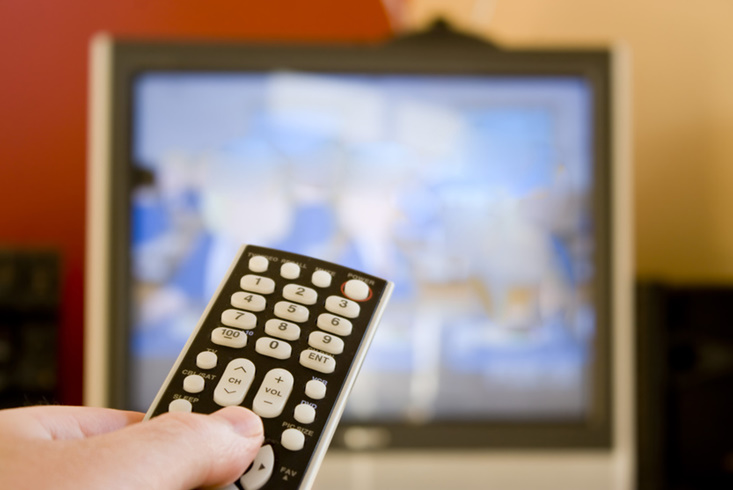
6) Grabs the viewers’ attention within the first three to five seconds. Remember the remote control is your worst enemy. You must engage the audience quickly or risk losing them.
I want to thank David Frey, author of the best-selling manual, “The Small Business Marketing Bible” for these tips. He’s spot on!
The latest Three Screen Report from Nielsen finds there is again another jump in viewing done over the Internet. And to the surprise of some, traditional television viewing also continues to grow. However, the report notes a slight decrease for watching video on mobile devices.
“Although we have seen the computer and mobile phone screens taking on a significant role, their emergence has not been at the cost of TV viewership,” Nielsen’s Jim O’Hara commented. “The entire media universe is expanding so consumers are choosing to add elements to their media experience, rather than to replace them.”
In the second quarter of 2009, the monthly time spent watching TV in the home by each user reached 141 hours and 3 minutes, up from 139:00 a year ago.
People who watch video on the Internet averaged 3 hours and 11 minutes compared to 2:02 last year.
However, the monthly time spent watching video on mobile phones was actually lower than a year ago … down from 3 hours and 37 minutes to 3:15.
Is it any surprise that major retailers still turn to traditional TV to reach the masses? People spend more time with television in just two days than they spend all month long watching video on the Internet and mobile phones combined.
And when it comes to critical mass, TV continues to lead the way in a big way. While Internet and mobile viewing are showing growth over previous years, numbers that do so are still relatively small, especially for mobile viewing.
Nielsen finds that 284.4 million Americans watched some TV in their homes during the second quarter. Less than half of them (about 134 million) watched some video on the Internet, while only 15.3 million watched video on mobile phones.
Music, in my opinion, is one of the most powerful yet underutilized tools in advertising.
Anyone who remembers the mid-70s also remembers:
Two all-beef patties, special sauce, lettuce, cheese, pickles, onions on a Sesame Seed Bun!!
Thirty years later I can still hum this old McDonald’s commercial. Times have changed, and trends in advertising music have definitely changed, but music’s role in advertising is as relevant as ever.
The biggest problem in today’s jingles is executions that push TOO HARD to make the viewer feel a certain way about the brand. Watching TV the other night, I saw a commercial for a local carpet store. At the end, a singer belts out gleefully:
JB factory carpets … the biggest … the best … always the lowest price!
I have to question whether I believe the singer’s sincerity. Is she really that happy about JB’s selection of fine carpets? Doubtful. And neither are the viewers. It’s the classic mistake of an advertiser talking about themselves, rather than addressing the viewers wants from the viewer’s point of view. Or maybe it’s the trite use of “biggest and best” … which ranks right up there with other homogenous phrases like “we won’t be undersold.”
True, the old McDonalds piece is a list of what you get on a burger. But it had charm and invited viewers to participate in seeing whether or not they could remember the list. And most importantly, the singers never hit you over the head with a refrain of “limited time only.”
Like many jingles in the 80s, the music painted a happy vibe that viewers associated with the brand. Remember Dr. Pepper’s “I’m a pepper, you’re a pepper”? And Toyota’s “I love what you do for me? Major advertisers haven’t forgotten how music can build brands …the executions have simply evolved.
Ba da ba-ba-ba … I’m Lovin’ It.
Indeed, I am. Here, McDonalds does it again. The music (and singers) establish an emotional connection with the listener, letting the Voice Over do the selling. The overall result is a commercial that reminds customers that McDonalds is more than just a value menu – but an experience you WANT to have.
Of course, there are times when the singer/music has to contribute a little more muscle within the message. Like singing the phone number for example. Just make sure the melody isn’t overly sappy if the lyrics are little more than a set of digits.
The music in this commercial humorously plugs the word “Free” 9 times within the span of 15 seconds. This is a perfect example of music conveying a very pointed message.
Here, a musical sting at the end of the spot reinforces the phone number. This is a more aggressive example of using music to achieve a very specific communication goal.
Yes, 15-second TV commercials are a wonderful tool for building media frequency. In fact, I’ve been a big proponent of them for years. And having been involved in the creation of hundreds of them, I can tell you they’re harder than 30s to pull off.
In developing the “creative idea,” focus on scenarios and situations that viewers can understand quickly. If they’re spending the entire commercial trying to “figure things out,” they’re not listening to your advertising message.
Since time is against you, it’s even more important to reinforce your brand along with the message. Consider finding ways to play up your brand’s colors … finding unexpected ways of integrating the logo … or dramatic moments that illustrate your point succinctly.
In short, things that will stick with the viewer long after the commercial has ended.
Above all, PACE yourself. Make sure the message is clear from the beginning because you won’t have the time to repeat everything. Most 15-second commercials feel like 30s that were crammed into half the time. If your pace is too quick, all will be lost.
Below are 3 examples, each using a different technique. All are unique in their own way. Yet all establish the premise immediately and pace themselves carefully.
In this commercial for one of our financial services clients, we used the entire span of 15 seconds to take the viewer on a visual journey ending up at an unexpected visual element that reinforces the client’s brand.
Here, multiple cuts and scenes make this 15-second spot seem longer than 15 seconds. At the end, the brand is represented by its people.
In this more recent commercial for the same client, the actor delivers lines directly to camera in a simple monologue format – while the “visual surprise” reveals itself in the window behind her.
I’ll begin by stating the obvious: not everybody has the ad budget of a Fortune 500 company. But that doesn’t mean your creative can’t compete on a national level. You just have to make your production money work harder.
Should you opt for an animated logo treatment? Custom music track? Film instead of video? A big name talent? You DON’T have to use them all to give your commercial serious creative firepower. They key is knowing what to splurge on.
By spending your money on one or two pricier components, the rest of your commercial production is elevated to a new level. Here are some examples where one or two splurges gave the TV creative national-caliber impact without a national-caliber budget.
Here, the storefront footage already existed. All we did was resize it and add quotation marks, which was VERY inexpensive. However, we needed a special voice over talent to bring the commercial to life. We opted for Tom Sharpe, for his widely recognized voice and unique style of humor. He was the only expensive component (10 times the cost of your average voice over talent) but well worth the expense.
Here, the custom music track and the animated logo treatment were the most expensive items (about $7,000 combined). However, these elements were used again and again in future commercials keeping long-term production costs down while keeping production values up.
Creativity in advertising should be anything but formulaic. A good idea, powerful visuals, a great voice over talent and a strong script will go a long way.
However, there’s something to be said for structure. Notice I said “structure” and not “formula.” The process demonstrated here shows how structuring the message can help viewers retain the message.
While this example shows the beginning, the middle, and the end of a retail TV commercial that communicates successfully, it’s important to note that variables can shift based on the complexity and amount of information.
1) Tell them what you’re going to tell them.
Start by telling your customers the “news.” If the commercial is about a special sale, tell them what it is. Better yet, find a hook people can remember.
EXAMPLE:
VO: At Florida Leather Gallery, think FREE times THREE! …
2) Tell them.
Now add the details. Reference any specific product shots, prices or particular offers. In this segment, the price/offer statement should be featured.
VO: … For a limited time, get free delivery, 2 full years free financing, and we’ll even pay your sales tax!
(Onscreen, a viewer sees graphics that coincide with the voice over and further support the offer):
1. FREE / Free delivery
2. FREE / Two years free financing
3. FREE / We’ll pay your sales tax
3) Tell them what you told them.
You’re running out of time, so focus on restating the sale name /hook/offer so they the main message stays with them.
VO: What are you waiting for! Think FREE, times THREE!
MUSIC/SINGER: Florida Leather Gallery!
A good structure will keep your message from getting confusing or convoluted. It’ll also keep you disciplined in making sure your message works within the small window of a 30-second TV commercial (or 15 seconds, as with the example above.)



 Posted by tvisnotdead




![1223614014164350284LlubNek_Closed_Envelope_1.svg.hi[1]](https://tvisnotdead.files.wordpress.com/2009/11/1223614014164350284llubnek_closed_envelope_1-svg-hi11.png?w=150 "1223614014164350284LlubNek_Closed_Envelope_1.svg.hi[1]")

 TV Is Not Dead

